Choosing the Right Packaging: Standard Perfume Sizes in ml and How to Find the Best Fit

In the professional fragrance and cosmetics industry, the capacity of a bottle directly impacts product positioning, filling costs, and the repurchase frequency of the end customer. When developing a new collection, understanding the standard perfume sizes in ml and how to distribute them across your range is a fundamental step in building a balanced offering capable of meeting consumer usage habits.
A bottle is not merely a container; it is the physical expression of the formula it holds. Choosing bottles for Screen-Printable Perfume Packaging makes it possible to create a consistent visual design across the entire range, maintaining the same graphic identity for both travel-size formats and traditional 100 ml bottles.
Why Capacity in Milliliters Defines the Fragrance Experience
The volume of a bottle influences the perceived value of the product and determines its primary use case. In the B2B fragrance and cosmetics market, formats are generally divided into three main commercial categories.
Travel and Discovery Sizes (10 ml to 30 ml)
Small-format bottles respond to the growing demand for portable and easy-to-carry products. Formats such as 10 ml, 15 ml, and 30 ml allow customers to test a fragrance with a limited investment, making them ideal for discovery kits, pocket-size packaging, or impulse purchases near retail checkout counters.
Classic Commercial Sizes (50 ml and 100 ml)
The 50 ml and 100 ml formats represent the historic standard in traditional perfumery and premium cosmetics. The 50 ml format offers the best balance between convenience and longevity, while the 100 ml bottle ensures the highest profit margin for the brand and delivers strong shelf impact thanks to its larger display surface.
Maxi Sizes and Refill Formats (150 ml and Above)
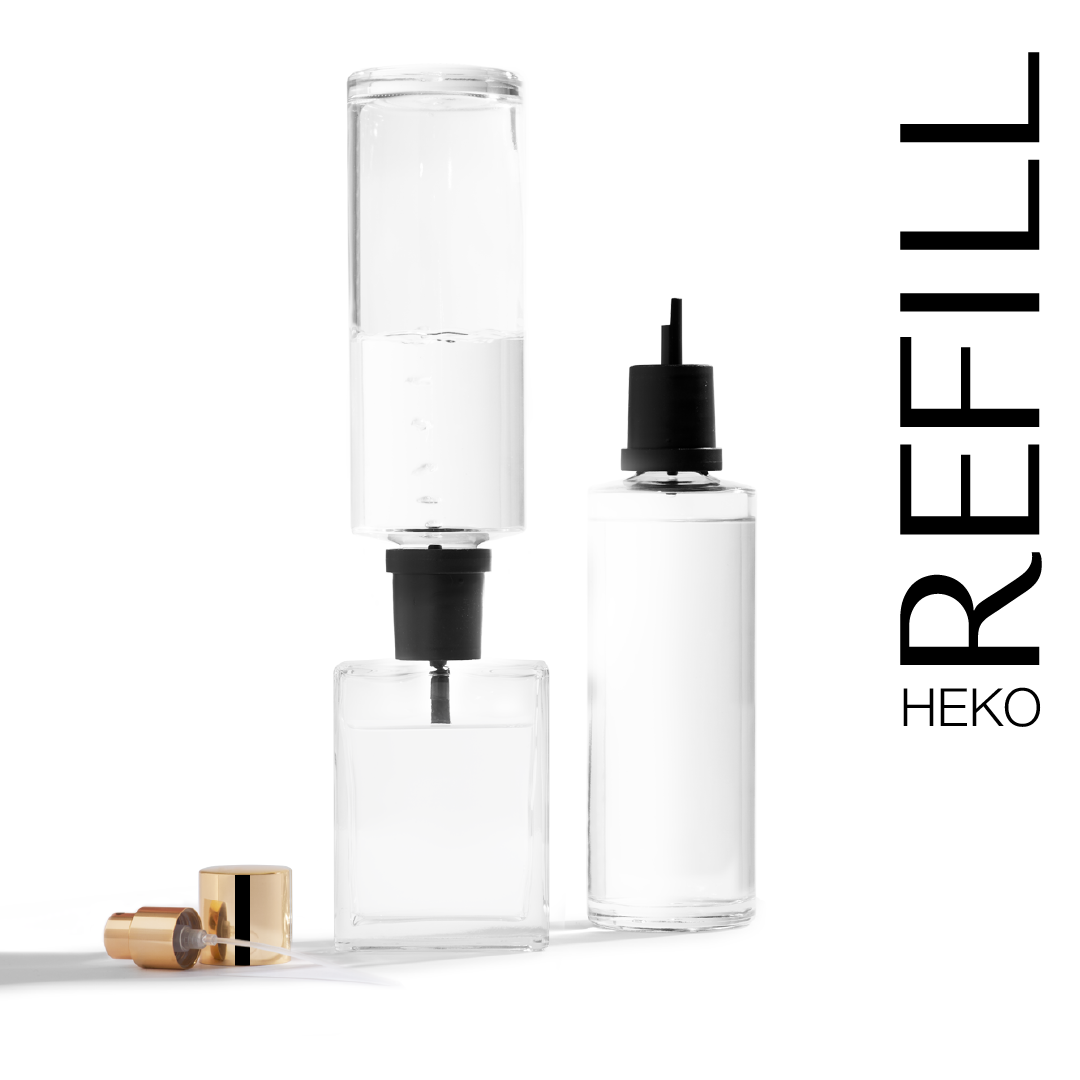
As sustainability continues to gain importance, capacities above 100 ml have experienced renewed growth. Formats such as 150 ml and 200 ml are increasingly used as refill bottles. This approach reduces overall glass consumption, lowers the environmental impact of shipping, and encourages the reuse of the primary bottle.
How to Determine the Right Standard Perfume Sizes in ml for Your Line
Choosing the ideal capacity requires an analysis of both the product type and the distribution channel. A line designed for artistic perfumery or niche cosmetics follows different rules compared to products intended for daily body care or skincare routines.
If you are developing a range that combines fragrances with facial treatments, it may be beneficial to pair spray bottles with airless comsetic bottles in glass and plastic, which can protect the active ingredients in serums and creams from oxidation while dispensing the product without waste.
When planning capacities, consider the following practical factors:
- Frequency of use: a classic fragrance naturally fits the 100 ml format, while highly concentrated extracts generally require smaller sizes (30 ml or 50 ml) because of their lower dosage requirements.
- Intended use: for hospitality facilities, spas, or travel applications, compact formats comply with carry-on luggage restrictions without sacrificing packaging elegance.
- Range consistency: maintaining the same neck diameters across different bottle sizes makes it possible to use the same closure accessories, reducing warehouse management costs.
Selection Criteria and Comparison of Bottle Sizes
A comparative analysis of the most common formats helps brands and laboratories align production with commercial objectives and target audiences.
| Format Category | Capacity (ml) | Primary Use | Advantages and Product Impact |
|---|---|---|---|
| Travel & Discovery | 10 ml – 30 ml | Discovery kits, travel use, pocket fragrances | Minimal footprint, encourages quick purchases, allows customers to explore the entire range |
| Standard Daily | 50 ml | Daily use, skincare, unisex fragrances | Excellent balance between price and longevity; ergonomic and easy to handle |
| Classic Luxury | 100 ml | Artistic perfumery, gift sets, premium collections | Maximum shelf impact and ideal surface for advanced decorative finishes |
| Refill & Maxi | 150 ml – 200 ml | Perfume and home fragrance refills | Reduces packaging waste and strengthens long-term customer loyalty |
Combining a 100 ml bottle with a 15 ml pocket version or a refill format makes it possible to cover every consumption need. In this process, selecting the right https://www.stocksmetic.com/it/accessori-per-profumi-cosmetici-profumatori, such as fine-mist spray pumps, metal collars, and decorative caps, ensures perfect leak protection while enhancing the application experience.
Creating a Coordinated Collection in Glass and Plastic
Ensuring visual consistency across bottles of different capacities is one of the most effective ways to make a brand instantly recognizable. Whether working with glass or plastic containers for fragrances, skincare, or body care products, continuity in shapes and finishes plays a key role in perceived quality.
Using perfume and cosmetics accessories makes it possible to customize jars and bottles of any size with colors, logos, and text that withstand use and humidity, creating an elegant and coordinated range without the need for manual label application.
Frequently Asked Questions
What is the difference between ml and fl. oz. on perfume packaging?
Milliliters (ml) indicate volume according to the metric system, while fl. oz. (fluid ounces) represent the Anglo-American unit of measurement. On perfume packaging, one fluid ounce (1 fl. oz.) corresponds to approximately 30 ml. Therefore, a 50 ml bottle is approximately 1.7 fl. oz., while a 100 ml bottle corresponds to 3.4 fl. oz.
Which perfume size is most popular in the B2B cosmetics market?
The 50 ml and 100 ml formats remain the best-selling sizes in traditional perfumery. In recent years, strong growth has also been recorded for 30 ml bottles and 15 ml travel-size formats, driven by increasing demand for portable products.
Is it worth launching a fragrance line with only one format?
Launching with a single format, usually 50 ml or 100 ml, allows brands to reduce initial production investments and focus marketing budgets on promotion. Travel sizes and refill options can be introduced at a later stage based on actual customer demand.
Do 30 ml and 50 ml bottles use the same spray pump or collar?
It depends on the bottle neck diameter (FEA size). If two bottles with different capacities share the same neck finish, such as FEA 15, they can use the same spray pump and cap, making it possible to optimize closure accessory purchases.
How does fragrance concentration influence capacity selection?
For an Eau de Toilette or Eau de Cologne, which typically require frequent reapplication, larger sizes such as 100 ml or 200 ml are generally preferred. For a Parfum or Extrait, characterized by high persistence and low dosage requirements, the most suitable capacities generally range from 15 ml to 50 ml.